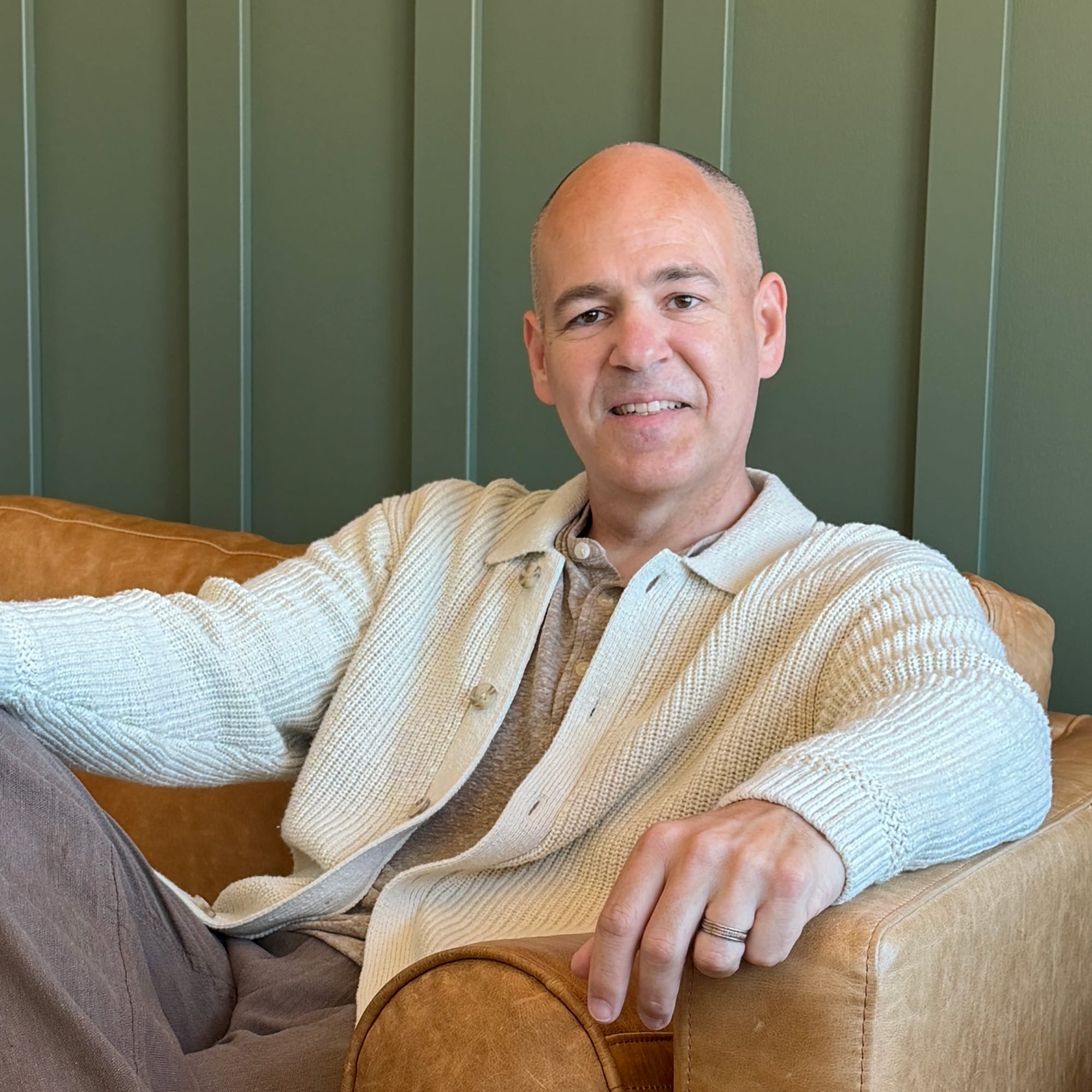
"There you are," she said, shortly after I walked through the door. She held my face in her hands and smiled at me. Her big brown eyes were full of love for the man she had been missing for several years. Right away I knew what she meant.
It was just an ordinary day, really. I drove the hour and a half to work, did my thing, and drove back home. But when I walked through the door I was different somehow. I was more me. Lighter. Happier. Fuller.
It was spring of 2011 and we were living in Wylie, TX, a suburb in the remote northeast corner of the Dallas metroplex. A place I had never heard of before we moved there. It's full of transplants from all over the country. Most of our neighbors moved there for job opportunities. We moved there to get away and start fresh.
During that season I had become pretty angry and cynical. Much of it traced back to the churches I'd been part of my whole life, and, more accurately, to never feeling like I fit anywhere. I was always a sort of black sheep, the one on the outs, always backing the losers. People close to me kept getting pushed out.
The one that hurt the most was my brother. Steve was the music pastor at our church. We played in the band together every week from the church's infancy at the YMCA. My whole weekend was filled with set up, tear down, band practice, sermons, services. Steve led on acoustic guitar and vocals, I played bass, and our brother Mark ran sound. Every week we did that.
The church grew fast and built a new building. No more set up or tear down. Just the services. The thing we made together became a thing we attended. Fast forward a couple years and my brother was "called to an exciting new ministry opportunity" in San Diego. That last time we played together was the last time I ever played at that church. We finished the set and the three of us, Steve, Mark, and I, gathered in Steve's office and had a good cry.
Fast forward several more years. Jennie is pregnant with our fourth child, and I'm relatively secure in my work as a software developer. But I'm not very happy. It's funny to say, because I've never been unhappy with my life as a husband or a dad. I love my wife and my kids more than anything, and my unhappiness never had anything to do with them. But we still attended that church periodically and I was growing more and more jaded. Eventually we left and spent several years at another church across town.
The questions I'd always had about faith and life didn't find clean answers no matter where I looked. So I looked somewhere different. I got into libertarianism and, weirdly, deep into the Austrian school of economics. I became a self-proclaimed Anarcho-Capitalist. It's absurd when I step back and think of it, but it's also right where so many men my age were at the time. I grew up in a theo-con world and was finding respite in a paleo-con one. Bizarre.
I was miserable and angry at the world. I didn't fit anywhere except with my wife and kids. So we moved to Texas almost on a whim. And this is where I shed the whole libertarian persona I had been trying on as a protective mask. The whole thing is so full of irony: I found my relief, found my sense of myself, in Dallas, TX, listening to Dallas Willard's Divine Conspiracy and attending a megachurch in Highland Park, one of the wealthiest suburbs on the planet.
I took a job with a staff augmentation firm working at Verizon in Irving, which is not close to Wylie. The drive was an hour and a half most days, unless I wanted to pay the eight bucks for the privilege of taking the President George Bush Turnpike — named in honor of George H.W. Bush, who is, among other things, not an anarcho-capitalist. So I had a long drive each day. Funny enough, this is where I found myself again, on those long daily commutes through the sprawling Dallas–Fort Worth metroplex.
In college I had read The Divine Conspiracy. This was near the end of my second attempt to really be a good Christian. It didn't help me with that. It upended a lot of things for me. On those commutes I returned to it. I got an abridged version Willard narrated himself, which I pirated via BitTorrent. My theft didn't blunt his message. When I pressed play it was just me and Dallas driving through Dallas, and it felt holy somehow. Up until then, Christianity had mostly taught me to endure this life faithfully until the real one began. Willard kept insisting otherwise: this is the life, and it's going on right now. It's not about somewhere far away and in the future, but about my actual life now, and the person I'm becoming.
As any self-respecting anti-establishment libertarian should, I had gotten into the doomsday-prepper movement. If I didn't have a family to feed, I probably would have had a shipping container full of food and supplies buried in the desert somewhere. But I did have a family, and not enough money to buy all the amazing stuff I wanted to bury for the inevitable collapse of society as I knew it. What I did have was some ammo reloading equipment. It's embarrassing to admit now. It's so much not who I am, but I tried it on for a while. I loaded my own ammo in my garage at night, drinking Sierra Nevada Pale Ale, my wife and kids asleep inside the house.
One day, probably a couple months into our year-long sojourn in Wylie, I was on the phone with Steve. There had been a shooting, and we were talking about what it would be like to be in such a horrible situation. I said something like, "I can't even imagine a scenario where I would actually shoot another human being."
And just like that, the whole ammo-loading, gun-owning phase of my life was over. It was a revelation to me. I'm not someone who uses weapons. That's just not who I am. What was I playing at? And, more importantly, why?
I sold the equipment not long after. The garage went back to being a garage. And I noticed the question didn't stop with the ammo press — if that wasn't me, what else had I been carrying around that wasn't?
Not long after that, I came home from work one evening, and Jennie took my face in her hands and saw me. Saw the real me.
"There you are. I've missed you."