

Why are questions so threatening?
In this episode, Jennie and Ryan talk about the very different lessons we learned about questions growing up. Jennie learned early that questioning could mean challenging authority, and that doing so might come with a cost. Ryan grew up almost on the opposite side of that, encouraged to question things and slow to realize that other people might experience my questions as threatening.
From there, we get into what questions can actually do. They make us look more closely at the stories, beliefs, relationships, and systems we inherited. And once we begin to really look, change becomes possible. That can be freeing, but it can also be deeply destabilizing.
We talk about Jennie’s experience growing up in conservative evangelicalism, Ryan's history of questioning authority, the ways those patterns have shown up in our marriage, and why lasting change seems to require more than simply deciding to think or behave differently.
Eventually we find ourselves asking what makes it possible to question and change without immediately becoming defensive or retreating into certainty. We come back to trust, curiosity, relationship, and the willingness to believe that another person might have something to teach us.
Maybe part of learning to live the questions is becoming open to being changed by our encounters with other human beings.
Transcript
[00:00:00]
Ryan: So I think we landed on why are questions so threatening? What makes questions so threatening?
Jennie: Yes. 'Cause last episode, we talked about learning to live the questions And for at least me
Questions have always been very threatening.
Ryan: Questions have been threatening for you?
Jennie: Yes.
Ryan: In what way?
Jennie: Well, I grew up in an environment where the general rule was they're just not allowed I was in Bible school. So here I am, 17 years old, and the teacher's teaching... He starts telling a story about babies thrown in dumpsters. It was just like a really weird situation. He's talking to a bunch of kids, and as he's sharing this story, one [00:01:00] of the kids stands up in the back of the room and asks him why he's telling this story, and it seems kind of off that he's doing that.
And I very much remember turning around, looking at that guy who's standing up, questioning the professor in class, and I'm, "You can do that?" Like it was so absurd that someone could actually ask a question like that and interrupt the class. - What
Ryan: exactly was his question?
Jennie: The student's? His question was, "Why are you telling this story? It seems disrespectful. There's a lot of women in this class. ,
It never occurred to me that it was inappropriate for this guy to stand up.
It was more like, in that context, especially at a Christian Bible school, "Wait a second, I [00:02:00] didn't even know someone could do this."
Ryan: So when you say, "I didn't know someone could do this," are you saying you didn't know it was okay to ask questions? Or more are you saying it wasn't okay for you
Jennie: to challenge authority? I think both.
Ryan: Both? Okay.
Jennie: Yeah. I think that I think those kinda went hand in hand. '
And it's interesting because in that story, for me, it was kinda like this you can question authority, but you can also, you can ask questions. I think for me, that moment is so profound for me is because questioning meant questioning authority. And that's not allowed at the root of it.
Ryan: So in your experience, kinda
what
Jennie: you learned was there's not really a difference between the type of question. Any question was a challenge- Mm-hmm ... to authority. Yeah. And I don't, I don't know if that was ever intentionally given to me, That was the message I received.
Ryan: [00:03:00] Mm-hmm. So no one ever sat you down
System
Jennie: or something like that Not that I recall Yeah Yeah That makes sense Mm-hmm. But that's where it's I don't think those sit-down conversations normally happen. , I don't think that's the norm.
Ryan: I know. I was saying that sarcastically. Yeah Of course no one's sitting down and said, "Never ask a question."
Jennie: Yeah. But I think that's really important to understand is most of us haven't had those conversations. It's these internal messages we got by observing, by watching, by listening, and then interpreting those in our own view
Ryan: Yeah. That kind of goes back to what we were saying last week about attachment and feeling safe.
Mm-hmm. And kind of how you learn to look outside [00:04:00] yourself to monitor for safety.
Jennie: Mm-hmm.
Ryan: Right. Um, that would kind of inform how you tend to interpret questions- Mm-hmm ... and either question or not. Right. How you ask your questions or
Jennie: field questions. Yeah, that makes sense. But let's turn it to you-
Stick with me?
Ryan: Sure.
Jennie: Why? Um, I, I wanna hear, 'cause you grew up in a very different atmosphere when it came to questions so how were questions acceptable or not acceptable in your family of origin?
Ryan: Well, I think my perspective on this has shifted a little bit over the years, but I think by and large, I would say I grew up learning that not only that questions were okay, but probably that questions were encouraged.
Um- [00:05:00] Mm-hmm
Watching TV with my dad, for instance, and he would often ask us "What message do you think this commercial or this news segment, what do you think they're really trying to say here?"
Jennie: Mm-hmm.
Ryan: So learning to read the subtext and
That was often kind of there, question everything.
Jennie: Mm-hmm.
Ryan: Question yourself, question... Eh, maybe not question yourself. I think it was more question, external authority- Mm-hmm ... is probably what we got.
Jennie: Which is still the opposite of what I got. Yeah, yeah.
Ryan: Yeah. Which explains a lot about why I've always butted heads with authority figures.
Jennie: Yeah.
Ryan: But what is it about a question [00:06:00] that is inherently threatening to people or to systems? 'Cause it seems like that's the case. Mm-hmm. , So you learned just not to do it for your own sort of personal safety.
Jennie: Mm-hmm.
Ryan: Was that... Would you say it that way?
Jennie: Absolutely.
Ryan: And I learned that it's just fine, and then slowly over years realized, "Mm, people don't like this.
I should keep my questions to myself more often and like pick my spots."
Jennie: Yeah.
Well, I think part of that comes in, you just have this genuine trust that someone's going to accept your question as a genuine question.
Ryan: Yeah, at face value. Yeah. That actually listen to the words and-
Jennie: Yeah, and not as a threat.
Ryan: Yeah.
Jennie: Like, "Wait, you're questioning what I'm doing?"
Ryan: Right. Yeah, 'cause it seems to be if you question someone, either a personal attack or an attack on kind of [00:07:00] an institutional belief or something like that. Yeah. So I just find that curious, and in the spirit with the main idea of learning to live the questions, that brings up a whole host of other- Mm.
challenges. And so if questions are inherently threatening, and I'm not
even saying that necessarily they are. I don't know if we accept that premise or not. Mm. Um, but it seems
Jennie: to be the case. Well, I think it kinda goes to this comfort in certainty, and if you question someone, it might rock their certainty muscle or, whatever you wanna call it. It's like there's this stability in certainty, and a lot of people have this bubble they've created around the certainty facts that they've, built their lives upon.
And if you start questioning that, there's [00:08:00] a genuine fear that that's gonna start to crumble. Mm. And that's what's so hard about the deconstruction process is if you start to notice things might be off or start to question, there's a real big possibility that things are really gonna start to crumble.
Ryan: Mm. Yeah, that's a good point. So just kind of the idea
Jennie: of change- Yeah ...
Ryan: in general
Jennie: Yeah, not too many people like change
I think the questions where I have felt people tend to be a little more unreceptive to, are the ones that, seem to address the underlying belief systems, underlying political systems, And especially people who don't really know why or haven't really thought about, the [00:09:00] reasons, behind those belief systems.
I think those are the groups that tend to be more threatened by those questions
Ryan: So part of the idea there
Some are more or less benign.
Jennie: Yeah.
Ryan: And others are more, what would you say, more destabilizing?
Jennie: Yeah, I like that word. Yeah.
Ryan: You've said that questioning in your experience growing up at least wasn't really All that acceptable. It was kind of frowned upon You got to learn Teach me how to be more and more comfortable with questions Mm-hmm
Tell me a little bit about how you think you learned that. Like what, [00:10:00] what told you that questions weren't really okay?
Jennie: I don't know if anything in particular told me. I think it was the message I interpreted, and that I assumed, based off of watching other people ask questions and based off of, the consequences that I would see happen.
Ryan: Mm-hmm.
Jennie: When we were first married, I would get upset when you would ask me questions, and I think it was more like I would say something or state something, and you would be like, "Why?" "Why do you think that is?" Essentially, I took those responses from you as, "He thinks I'm stupid."
Ryan: Mm.
Jennie: And, I don't know at what point in our marriage, we had quite a few [00:11:00] conversations, and at some point, the message came across finally that you didn't think I was stupid.
You were curious. You wanted to know, and sometimes you did play devil's advocate, but that was just something you learned to do.
Ryan: Yeah. I remember having those conversations lots of times.
Jennie: Mm-hmm
Ryan: So the question that I often ask is, what do you mean?
Jennie: Mm-hmm
Ryan: Sometimes you would interpret that as , "What are you talking about?" Yeah. Don't be dumb. What are you talking about? Mm-hmm. Something like Not that I never do that. I do sometimes, but
Most of the time I'm not doing that. Mm-hmm. So just kind of realizing our patterns, our learned kind of ways of interpretation and [00:12:00] assumption- Mm-hmm ...
Jennie: and all that kind of stuff. Yeah, that's been an interesting journey. Mm-hmm. I think part of that is trusting that you're not out to get me.
Ryan: Yeah.
Jennie: And, I think that seems to be the underlying theme with questions, is this idea that if someone's asking me a question like, "What are you talking about?"
They're out to get me. And so catching myself in that old mindset and being able to go, "Wait, no. He's not out to get me. He genuinely is curious about what do I mean?" So expand upon that-
Ryan: Mm-hmm ...
Jennie: has been, yeah, I think really helpful in our relationship.
Ryan: Mm-hmm. Yeah, I remember you telling me that you would do that mentally.
Like you would just tell yourself-
I've [00:13:00] always really appreciated that and respected, and kind of admired. Not kind of, I've admired how over the years
softened to that and changed. And it's, I think, a really good example of how change happens, right? It's slow.
Jennie: Mm-hmm.
Ryan: But you're interrupting that cycle of sort of automatic response and reflexivity. Mm-hmm. So you have a reaction to whatever is sort of coded in the language of my question, which, is your nervous system's
way of interpreting the world and keeping you safe
Kind of teaching yourself by doing that repeatedly that, "No, this is different. It's safe here. We can engage this a little bit differently." Mm-hmm.
Jennie: And
Ryan: I [00:14:00] think over the years, that really has changed a lot for you. Mm-hmm. You can more quickly get there sometimes even just reflexively take it as a question at face value.
Jennie: Mm-hmm.
Ryan: Mm.
Jennie: Yeah.
Ryan: What do you think about... Is that, does that sound right, that kind of process of change?
Jennie: Yeah. Yeah, I think it very much is right. I think that it's-- goes to show how, that kinda change is almost necessary in relationship.
There's so many people that'll come into, the room and ask, "How, how do I, stop doing this?" People wanna stop right then and there, but change, that kind of innate change that...
I mean, I think I was 35. So you're talking like 35 years of seeing and interpreting conversations through this lens of [00:15:00] safety, that you're just starting to unravel and starting to pick away at. What I constantly go back to is it takes time, and it starts with noticing.
And it might be noticing the aftermath of the reaction.
Ryan: Mm-hmm.
Jennie: And then learning to close that window between what happened and the reaction. So it takes time to get there, and then getting to a place to where you start to notice what's building up before the reaction. I would say for most people, it's not immediate.
It can take days, months, years before you get to a place to where you catch yourself, be like, "Oh, wait, this is an old pattern."
Ryan: Mm-hmm. "
Jennie: I am safe." And like, for me, "I am safe in this relationship."
Ryan: Yeah. "
Jennie: And he's not trying to get me. He genuinely is curious about me," and that totally reframes everything.
It's like, "Oh, okay, this is [00:16:00] curiosity. This isn't I'm out to get you."
Ryan: Yeah. I remember sometimes being frustrated that-
I told you you're safe. Like, why are you still-
Jennie: Mm-hmm ...
Ryan: saying that I think you're stupid? I don't think you're stupid. And so then I'd react Yeah, it took me a long time to realize what you're talking about. It's not-- the change is not gonna be immediate. It's a process, right? Mm-hmm. One of the things that's really helped me just in terms of thinking about all this stuff is what you're saying and what we've just described, this rewiring of your neural circuitry, so to speak- Mm-hmm
is kind of what you're describing. But then also removing any sort of moral frame- Mm ... from the discussion entirely. For me at least, switching to thinking about the way I just framed it as sort of neurological [00:17:00] rewiring is very different than thinking of patterns of sinful behavior or whatever you wanna call it
, That's something I've noticed that it takes a lot of the Good or bad out of it. It takes just the guilt and shame away from it, for me at least. Mm-hmm. And just allows it to be, and then I can, like you said, notice it more. I can take a closer look at it without recoiling in disgust at myself- Mm-hmm
or something like that. And, and then make a more conscious decision about how do I wanna act, who do I wanna be in the world.
Jennie: Mm-hmm.
Ryan: And I think also to kind of tie back into our general posture for this show and who we are as people, the idea of creating a safe space for others to find their own lonely way.
That, to me, seems like a prerequisite [00:18:00] for the sort of change that you're describing- Mm-hmm
But primarily, I think it's about relationship and- Mm-hmm ... uh, it's a hard one to describe for me because it's kind of a slow work of deep kinda healing relationship. Mm-hmm.
So like I'm a nervous system inside a body-
Jennie: Mm-hmm ...
Ryan: inside a relationship, our relationship Inside a family and our families of origin, and you just keep branching out.
Jennie: Yeah.
Ryan: And there's all these systems, and we exist within, , a religious worldview and whatever else, our political system. And then there's this historical context, so you get time into the mix and, We're not just isolated
isolated individuals that can go change in a vacuum, so to [00:19:00] speak. Um, and change at any one of those levels affects all of it.
And so change anywhere kind of by definition affects everything else, and I think that's a really important thing to consider.
Jennie: Mm-hmm.
Ryan: I think so much of what kind of pop culture therapy is about is individualistic change. , Just go change you and-
Jennie: Yeah ...
Ryan: and that's all that matters. But there's going to be some effect-
Jennie: Right ...
Ryan: on yourself and others, and then that comes back too. It, it reciprocates
it's like this recursive change is what I mean to say.
Jennie: Questions have a tendency to create change.
Ryan: Yeah. They make us look.
Jennie: Yeah. And so here, if you start to ask questions and look at the belief system that you inherited or are living in, it creates [00:20:00] this sort of chaos ripple effect.
And, so whether it be belief system or, thinking about political party that you're a part of, whether you get to know someone who is, of a different, religious background or, race, and you start to realize that maybe what I thought or what I believed about this particular person or particular group of people, maybe that's not really all true.
Maybe there is a different story. Can be extremely threatening to the system, whether it be your immediate family system or extended family system on- ongoing. Mm.
It seems like Maybe this goes to show how sheltered I am But thinking about, , growing up in a very [00:21:00] conservative evangelical home, You know, the idea was we're never gonna vote for anyone who's for abortion. So pro-life was save all the babies regardless of anything.
I mean, I was probably 12 at an abortion clinic with the signs, and here I am 12 years old with a bunch of youth from my church, and I very vividly remember hearing a lady, she had her arm around another lady, and they were going into the abortion clinic. I remember hearing her go, "See, look at all these kids.
They don't know your story." And
It just goes to show that
If we refuse to zoom out and hold the stories of people and refuse to listen to and hear what it is that this person is going through, who am I to-- [00:22:00] I mean, I, I don't know what this woman's story was.
Ryan: But what about the questioning? So why, as human beings, why do you think we're so resistant to looking at that, like to questioning it? So think about that from the perspective of that 12-year-old girl, you and your youth group people that you're with, and the leadership that brought you there.
What would it cost to question that?
Jennie: Oh, it would cost... I mean, it would've cost my community. It would've cost-- I'm just now picturing all the, people listening to this who are so, caught up in their own belief system that abortion is bad at all costs. I mean,
I'm
just picturing-
Ryan: Are you afraid this is going to alienate [00:23:00] people by saying this stuff?
Jennie: I'm afraid this is gonna alienate people, and I also am afraid that this is going to-- people are gonna put me in this category, um-
Ryan: Of pro-choice?
Jennie: Yeah.
Ryan: That would be devastating, huh?
Well, yeah, that's what we do.
, We just flatten it down to you're good and you're bad. Yeah. And you're good and you're bad. And then we sort people with some kind of really distorted heuristic of who people are and what they are. Mm-hmm. Yeah. It's interesting though, like you're thinking about that in real time almost wanting to censor yourself, um
Jennie: Going back to what you had said what's so hard about like asking questions and change, and I think I just go back to that certainty is that people are so [00:24:00] caught up in wanting to be certain, in everything. And if a question causes instability or a shaking of that certainty, there is gonna be change.
I mean, we can refuse change. We can refuse to
look. We can close our eyes. All that's a choice. We can choose to continue looking and asking questions, or we can choose to just stop. It's kind of what you were told to do
Ryan: That is true
Are you handing me the ball?
Jennie: Yes.
Ryan: Okay. Um
Yeah, I was more or less told to stop thinking about what I had been thinking about. And it's interesting, like you're bringing up certainty, [00:25:00] and I'm with you. I think you're exactly right. Like the 12-year-old girl Is part of a system of certainty.
Jennie: Mm-hmm.
Ryan: And collectively you're there with your definite opinion, which in your minds is big T truth To tell other people how to live or how not to live or what to do or what not to do.
Um, and
I think, if I think about my sort of journey or quest for certainty
I don't know. It just feels different to me than that, than wanting to tell other people what to do. I think for me, my sort of lifelong [00:26:00] quest for certainty was to try and
Make sense, of the world I inherited The relational world, the intellectual world, the religious frame. The cosmology, all that stuff. I inherited a world of certainty that I never felt certain about. And so for most of my life, I was asking questions about The big picture frame of things.
Does this actually make sense? And it wasn't really an intellectual project, it was more a, I guess more from an experiential standpoint. But then it would turn into, how does this fit? Um, [00:27:00] so I'd have these experiences, which I tend to call what the hell moments, that are almost glitches in the matrix or, when Jim Carrey gets to-
Jennie: Mm
Ryan: the edge of the dome that he's in, in The Truman Show or something like that, and they're like, "What is this? What is this thing?" "This doesn't make sense. How does this fit here?"
Jennie: Yeah. At what point- did you start to realize that asking questions might be unacceptable or might be threatening to people? Yeah, that's interesting I think too, because, you learned that intuitively as a kid. Mm-hmm.
Ryan: I learned just the opposite. And what I, I think I've had to learn as an adult is that- questions or threatening people. People don't like it. And, um, I'm a slow [00:28:00] learner, I guess, because I've had a lot of, interpersonal challenges, I think because of it. And I've had so many people tell me what you've told me over the years, "You think I'm stupid."
I'm like, "No, I don't. What are you talking about? I don't think you're stupid." Um, "I wouldn't be talking to you like this if I thought you were stupid, because I wouldn't really care what your response was. I just wouldn't ask the question if I thought you were stupid or incapable of thinking about these things."
And I've always found that curious. Why do people get that from me? I don't get it. Mm-hmm. I think it goes back to that feeling of safety for people. And I think I just have this real naive sense of safety in the world. Mm-hmm. And so I'm, I always feel free to ask questions. I think that's, we've kind of gone in opposite directions in that.
I've had to tone that [00:29:00] down, and my nervous system has learned more and more over the years that I should not ask the question. Mm-hmm. Where you've had to learn the opposite thing.
Jennie: But was there a moment, that you, or are there moments in your life that you can look back
Ryan: to that where you realized that, "Well, maybe-" Yeah ... "maybe this question isn't..." It's, it's funny 'cause y- earlier you were talking about speeding up that cycle of noticing. And, some of my examples I looked back on retrospectively, like 20 years in the- You're a little slower on that.
Very, very much so. , So yes, there are lots and lots of those. It's all kind of tied up with some of those, what the hell moments. One that comes to mind is when I was a freshman in high school, actually it was the eight- the summer of my eighth grade year. I was going into football, and all my brothers played football, so I knew all the coaches and everything.
And anyway, there was this thing that happened at the school, and the [00:30:00] head coach had fired one of the assistant coaches, and I didn't think it was right, and like I was pretty upset about it. And so I had started a petition to, it wasn't really a question, but it was a challenge to an authority figure.
And, um- I did this in good faith from my perspective. I wasn't trying to be provocative or bring down the head coach. It wasn't intended to be a personal attack on him. It was more, bringing to light something that I thought was an injustice. That didn't go well at all. Like it kinda sunk my hopes for any sort of football career at...
Not, not that I was ever gonna have a, a professional career in football, but just my high school experience of football was severely impacted due to that, due to my choice to [00:31:00] challenge the authority. And so that was one, I guess. Um-
Jennie: How did it take you looking back to kind of see that as a, "Ah, maybe questions aren't safe
Ryan: for everyone"? Well, it's so interesting the way that we spin this stuff in our minds and the stories that we weave around these things. And so for most of my adult life-- Well, even starting then, like in adolescence- Mm-hmm
I started to take on this frame of reference that kind of viewed myself as the problem. Like I'm, I don't fit in this world that I was given. I don't really believe it very much. Like it just doesn't work that well for me. I tried to live into it, But then I sort of... I don't know, I just never fit.
And so I did things. Some of my behavior was not great, [00:32:00] and so I just took on the role or the persona of, , the black sheep in the family.
Jennie: Mm-hmm.
Ryan: So I haven't really thought of that as questioning authority much until just the last, I wanna say, 10 years maybe. There was a conversation I had, with someone years ago, and she was hearing some of this and kinda gave me a different perspective.
She just said, "Oh, you were the truth teller in your family." And I'd always thought of myself as a liar. But it was more like your behavior was telling the truth about the system that you were a part of, and that really reframed a lot for me. I'm still kinda wrestling with that all these years later.
Jennie: Mm-hmm. Isn't it interesting how talking with someone who's, , listening and knows you at that kind of a level [00:33:00] has such an incredible power to reframe- Mm-hmm ...
Ryan: years'
Jennie: worth of beliefs about ourselves?
Ryan: Yep. Yeah, it totally is. And then, and then it takes a long time. It's not like I'll ever be done with that.
I'm going to Live with the 35 years of framing myself as the problem. Mm-hmm. I guess it wasn't that long because In early childhood, I didn't have that perspective at all. But then in early adolescence, like in middle school on, I started taking on this totally different perspective. And so that then became my personal frame of reference for a lot of years, and that doesn't ever go away.
Mm-hmm. Like it's, uh, it's a part of me.
Jennie: Mm-hmm.
Ryan: It's a part of my nervous system, if we wanna keep framing things that way.
Jennie: Mm-hmm.
Ryan: Uh, it's part of my story. And that's okay. It's just I'm gonna live in that forever.
Jennie: Mm-hmm.
Ryan: Um, but it doesn't have to [00:34:00] totally define me. It's just something that is part of my history.
Mm-hmm.
Jennie: Mm-hmm.
Ryan: Yeah. So that's one example, I guess, would be the time I started a petition as a freshman in high school. Mm-hmm. Um, yeah. I could've been a community organizer, I guess.
Jennie: Could've.
Ryan: Yeah. I took a very different road. Yeah. So the question for us, I think, comes from personal observation, - Yeah ... like anecdotal information that it's really not that safe to ask questions. It's-
Jennie: Yeah ...
Ryan: it's threatening to people. It's threatening to institutions and power structures to, to ask questions, because like you said, it tends to destabilize and lead to change,
Jennie: which
Ryan: I
Jennie: think
Ryan: throughout
Jennie: my [00:35:00]
Ryan: career, my adult life really, I've realized that people don't really like change, which is not a, profound insight of mine, but it's certainly something I've observed firsthand over the years.
So if our premise is that, , questions are threatening because they make us look and honest looking leads to some sort of change
Jennie: And change destabilizes the system
Ryan: Yeah, the systems that we're a part of.
Jennie: Mm-hmm.
Ryan: And that kind of scales up-
Jennie: Yeah ...
Ryan: from the individual to the family and so on out to societal stuff.
Jennie: Mm-hmm.
Ryan: And so there's sort of this equilibrium that systems wanna find, and not so we're sort of, that's a thing, right?
Um-
How do we do this more safely, more openly? What [00:36:00] makes for an environment that's suitable for more openness to questions and openness to change?
Jennie: That is a good question
Ryan: Well, I feel like our marriage is an example of it. And so I'm, I'm not trying to say, , we have a perfect marriage, but we have changed a lot. We're both really high on openness to change- Mm-hmm
or openness to new experience,
Jennie: mm.
Ryan: Both of us have, are very high on adaptability.
Jennie: Yeah.
Ryan: Mm-hmm. But that, so that's part of it, for sure. I think we're both open to change. Yeah.
Jennie: I think there's also, , a posture of curiosity for the other person. I think there's, , a underlying trust in the good intention of the other [00:37:00] person.
I think there's a willingness to see the humanity in the other person as well. And,
I think , if you go into a conversation with your defenses up, there's a immediately an automatic, , distrust of what the other person is, , coming in as. And I mean, given there's a whole bunch of reasons why one would do that. , I go into certain conversations already, understanding, "Okay, this person is not safe.
They're, , untrustworthy and, , I just need to make sure I'm safe in this place right now." But it seems like , there's just a lack of relationships that people have where there's a genuine felt safety, , ability to trust the other person is out for their good and, , genuine respect. [00:38:00] And so I think that it's almost like fostering spaces of conversation that hold that kind of safety, respect, and honoring the other person's story- Mm-hmm
is necessary. But it seems like there's so few of those. Now many of us thought that was in the church, but It's not really there. Um, I mean, unless you're going to believe A, B and C and not say one, two, three.
Ryan: Hmm.
Jennie: Um
I think people are genuinely craving for spaces where they can ask questions and dig into who they are and what they believe and who they wanna be, people are genuinely looking for those [00:39:00] spaces, and they're so few and far between.
Ryan: Hmm. Yeah, I know that's been true for us.
Trying to find those spaces in the church communities we've been a part of has been a real, I think for both of us, just painful, kind of lonely-
Jennie: Yeah ...
Ryan: well, I think as usual, we don't have all the answers. Uh-
Jennie: Sure have a lot of questions.
Ryan: Do have a lot of questions, and now we've learned that questions are threatening.
Jennie: Yeah.
Ryan: Just kidding. I think we've both learned that a lot over- Yeah ... the years. But no, I think it's an important thing to keep considering the idea that...
I know it is for me, just to keep thinking how can I create a safe space for others to find their own along the way and invite them into, I think like you said, a more of a posture of curiosity as [00:40:00] opposed to a system that hands them the answers and asks them to conform to it.
Jennie: I like that. And in the same way, not expect them to conform.
Ryan: Yeah.
Jennie: I feel like if there's this ulterior motive of expectation, like asking a question, expecting a certain answer, if we have this more of op- an open posture, we're able to accept what they have to say.
Ryan: Yeah. Yeah,
I like that, But I also think it's one of the reasons we've had such a hard time finding a place to fit in the world, is because we both kinda do that, and not everyone's very comfortable with that. Mm.
Like idea systems like a religion or a political movement or something like that have a definite, "Here's what matters in the world. Here's who you should be. Here's how you should [00:41:00] participate. Here are the things that are acceptable and not." And not that we don't have that, but it's not very rigid. It's very much like,
Jennie: hmm,
Ryan: there's a lot of ways of looking at all this stuff.
And, uh, kind of like you opened with, your story of being 12 at the abortion clinic. You kind of frame that as, "We have the right answer. We have the way of looking at this. Here's the way of being, and you're outside of this, and therefore I'm gonna shout you down."
Jennie: Mm-hmm.
Ryan: Uh, as opposed to what you're saying now is, "You're right.
I didn't know that person's story at all. I missed the human being there." Mm-hmm. "And I just was trying to impose my way of looking at things on another person."
Jennie: Mm-hmm.
Ryan: But that then opens us up to-
Jennie: Ridicule. [00:42:00]
Ryan: Yeah, and the pigeonholing- Yeah ... you kind of described. Like, "Oh, you're pro-choice. You're morally unacceptable."
Jennie: Mm-hmm.
Ryan: Well, it's a lot more nuanced than that.
Jennie: Yeah.
Ryan: What about the humans here? Hmm.
Jennie: Exactly. Yeah.
Ryan: Hmm. I
Jennie: I know I have my own biases and my own ways of looking at things.
But I think there's something about noticing the biases that come up when I'm talking with someone and opening up myself to maybe I have something to learn from this person. Mm-hmm. Or maybe this person really does have something to say, and being curious about their story.
'Cause really all of us have hard, beautiful stories. And I mean, and I'm, I'm a huge believer in, yeah, someone may have a [00:43:00] extremely hard story, but there's, there's glimpses of beauty in it. Mm-hmm. And it's so we aren't who we are today if it wasn't for our stories and the people in our lives and our families of origin.
All of that makes us who we are today.
Ryan: Yeah, I love that. The idea of the posture of curiosity, the idea that everyone has something to teach me, something I can learn from and grow from. Mm-hmm. As opposed to, "I'm the authority here. I know what's right." Mm-hmm. "I know what's wrong. I know what matters."
Yeah.
And I'm open to being changed by-
Jennie: Mm ...
Ryan: the encounter with another human being.
Jennie: Oof. That's beautiful. I think that is the essence of what it means to create a safe place for someone to find their own lonely place.
Ryan: [00:44:00] Mm.
Well, I guess we answered it. Way to go.
Jennie: Yeah, that's episode two.
Ryan: Yeah. Now no one will be threatened by questions ever again. We just answered that question once and for all.
Jennie: Yes. The only right way.
Ryan: That's right. Congratulations world, we fixed it. Yeah.
Jennie: Ah. Well, this was fun
Ryan: Yeah. Okay. Well, until next time.
Jennie: Until next time.
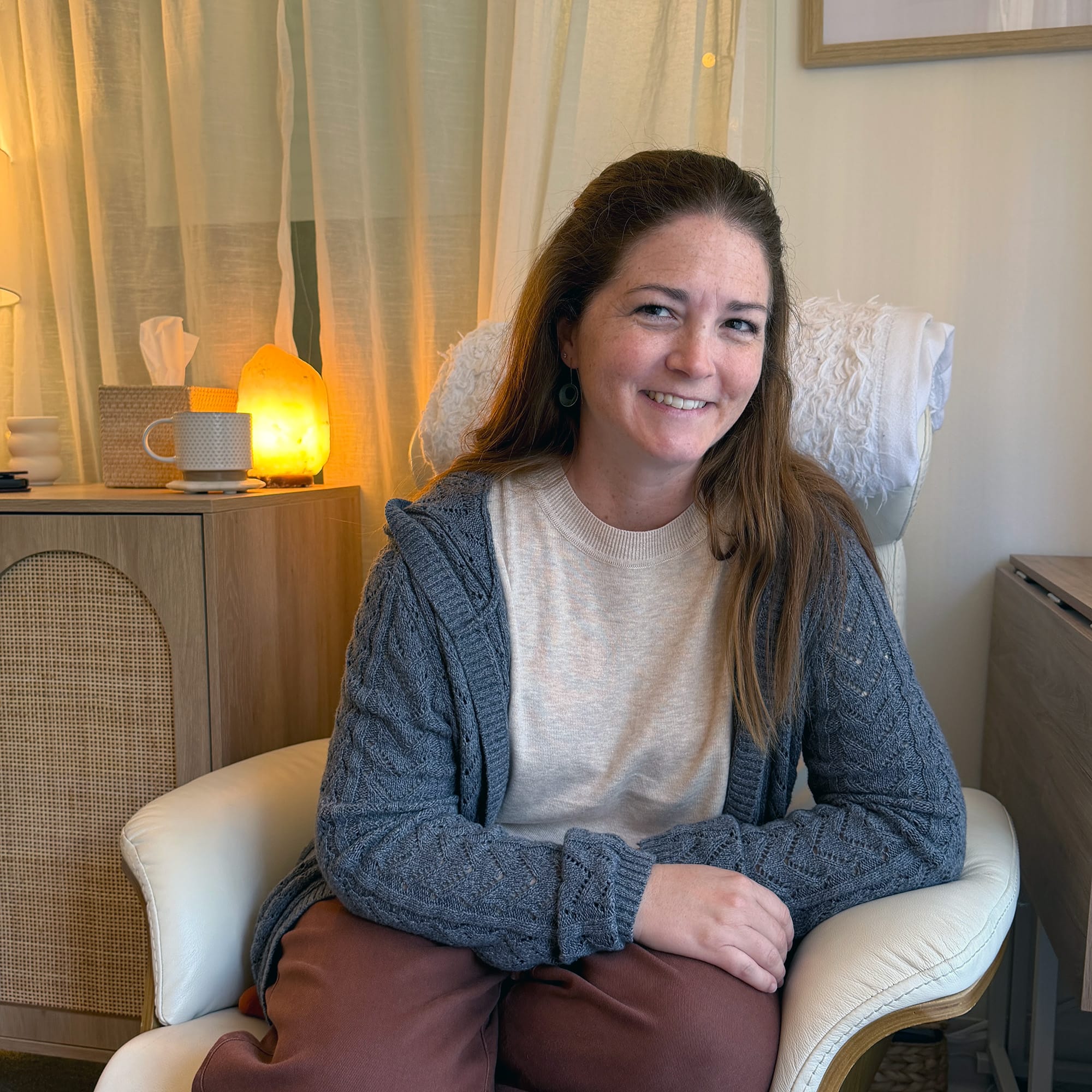
Ryan and Jennie are marriage and family therapists in San Clemente, California.
Learn more about their clinical work at Denney Family Therapy.